
Climate Risk and Executive Decision-Making
Climate risk is no longer solely an environmental issue. It is increasingly influencing operations, supply chains, infrastructure, workforce resilience, investment decisions, and long-term competitiveness. Organizations that integrate climate intelligence into executive decision-making will be better positioned to strengthen resilience and navigate an increasingly uncertain future.
Executive Insight
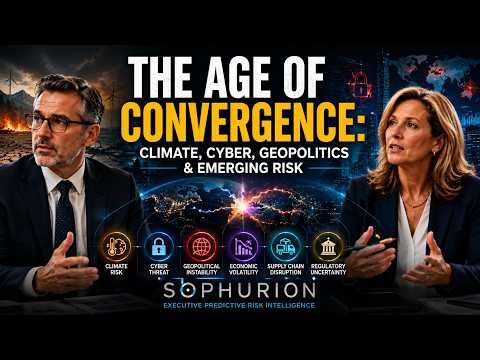
Climate change is increasingly being discussed in boardrooms, executive meetings, investor briefings, and government policy discussions around the world. Yet despite growing awareness, many organizations continue to view climate risk primarily through the lens of sustainability reporting, environmental compliance, or corporate responsibility initiatives. While these areas remain important, they represent only part of a much larger challenge. Climate risk is rapidly emerging as a strategic business issue with implications for operations, supply chains, workforce resilience, financial performance, infrastructure, investment decisions, and long-term competitiveness.
The reality is that climate change is no longer solely an environmental issue. It is an economic issue, a geopolitical issue, a supply chain issue, an infrastructure issue, and increasingly, a leadership issue. Organizations operating across virtually every sector are finding themselves exposed to risks that extend well beyond traditional environmental considerations. Rising temperatures, extreme weather events, water scarcity, changing regulations, shifting consumer expectations, insurance market volatility, and resource constraints are creating new pressures that require executive attention.
As a result, climate risk is becoming an increasingly important component of strategic decision-making. Organizations that understand how climate-related developments may influence their operating environment will be better positioned to strengthen resilience, manage uncertainty, and identify opportunities in a rapidly changing world.
Climate Risk Is Expanding Beyond Sustainability
Historically, climate-related discussions within organizations were often confined to sustainability teams, environmental departments, or compliance functions. The focus tended to center on emissions reporting, environmental performance, regulatory requirements, and corporate responsibility commitments. While these activities remain important, the nature of climate risk has evolved considerably over the past decade.
Today, climate-related disruptions can directly influence operational continuity, supply chain reliability, workforce productivity, infrastructure resilience, commodity prices, and access to capital. Extreme weather events are affecting transportation networks, manufacturing facilities, agricultural production systems, and energy infrastructure with increasing frequency. Water stress is creating challenges for industries dependent upon reliable access to freshwater resources. Rising temperatures are affecting labor productivity and increasing operational costs across multiple sectors.
These developments illustrate why climate risk can no longer be viewed solely as a sustainability concern. It has become a strategic issue capable of influencing organizational performance across numerous business functions. Executive teams that continue to treat climate risk as a peripheral issue may underestimate the extent to which environmental change is reshaping economic and operational conditions.
Understanding Physical and Transition Risks
One of the reasons climate risk can be difficult for organizations to evaluate is that it manifests in multiple forms. The two most commonly discussed categories are physical risks and transition risks, both of which can create significant challenges for decision-makers.
Physical risks stem from the direct impacts of climate-related events and environmental changes. These include extreme heat, flooding, droughts, hurricanes, wildfires, sea-level rise, and changing precipitation patterns. Such events can disrupt operations, damage infrastructure, interrupt supply chains, increase insurance costs, and reduce workforce productivity. In many cases, these impacts extend far beyond the location where the event occurs, creating cascading effects throughout interconnected economic systems.
Transition risks arise from the global shift toward a lower-carbon economy. Regulatory changes, evolving investor expectations, technological innovation, changing consumer preferences, and emerging market dynamics can all influence organizational performance. Companies may face new reporting requirements, changing compliance obligations, evolving stakeholder expectations, or increased competition from organizations that adapt more quickly to changing market conditions.
Both categories of risk require executive attention because both have the potential to influence strategic objectives, operational performance, and long-term competitiveness.
Climate Risk and Organizational Resilience
Climate risk is increasingly becoming a resilience issue.
Organizational resilience is often discussed in the context of cybersecurity, business continuity, supply chain management, or crisis response. However, climate-related disruptions are now influencing many of the same areas. Extreme weather events can interrupt production. Water shortages can affect manufacturing operations. Infrastructure disruptions can delay transportation and logistics activities. Energy system vulnerabilities can influence operational reliability. Insurance market instability can affect investment decisions and long-term planning.
The interconnected nature of these challenges highlights the importance of viewing climate risk through a resilience lens. Rather than asking whether climate change will affect an organization, leaders should increasingly focus on understanding how climate-related developments may influence critical business functions and what actions can strengthen preparedness.
Resilience requires organizations to evaluate vulnerabilities, assess dependencies, identify potential disruptions, and develop strategies capable of supporting continuity under changing conditions. Climate intelligence can play an important role in this process by helping leaders understand emerging risks before they become significant operational challenges.
The Growing Importance of Climate Intelligence
One of the most significant challenges facing executives today is the sheer volume of information available regarding climate change. Scientific reports, regulatory developments, market trends, emissions data, weather forecasts, and sustainability disclosures continue to expand at a rapid pace. While access to information has improved dramatically, information alone does not necessarily support better decision-making.
Executives require intelligence rather than data.
Climate intelligence involves transforming diverse sources of information into actionable insights that support strategic planning and risk management. It helps organizations understand how climate-related developments may affect operations, investments, supply chains, infrastructure, customers, and stakeholders. More importantly, it provides context regarding why those developments matter and what actions should be considered in response.
As climate-related risks become more complex and interconnected, the ability to generate meaningful intelligence will become increasingly valuable. Organizations that can identify emerging trends, evaluate implications, and integrate climate considerations into broader strategic planning processes will likely be better positioned to navigate future uncertainty.
Climate Risk as a Competitive Issue
Many organizations continue to approach climate risk primarily as a defensive challenge focused on reducing exposure and maintaining compliance. While these objectives remain important, they represent only one side of the equation.
Climate change is also creating opportunities.
The transition toward more resilient and sustainable economies is driving innovation across industries. New technologies, products, services, financing mechanisms, infrastructure investments, and business models are emerging in response to changing environmental and market conditions. Organizations that understand these developments early may identify opportunities for growth, differentiation, and long-term value creation.
History consistently demonstrates that major periods of transformation create both risks and opportunities. The organizations that succeed are often those capable of recognizing change before it becomes obvious and positioning themselves accordingly. Climate change is unlikely to be an exception.
This is why executive decision-making must move beyond compliance and risk mitigation toward a broader understanding of strategic implications. Climate-related developments will influence competitive landscapes, investment priorities, consumer behavior, and market opportunities for decades to come.
Looking Ahead
The coming years are likely to bring increasing pressure on organizations to understand and address climate-related risks. Regulatory expectations will continue to evolve. Investors will demand greater transparency. Physical impacts will become more visible. Stakeholders will increasingly expect organizations to demonstrate preparedness and resilience.
At the same time, uncertainty will remain a defining characteristic of the climate landscape. The precise timing, magnitude, and distribution of future impacts will vary across regions and industries. This uncertainty makes strategic planning more challenging, but it also reinforces the importance of foresight, resilience, and intelligence-driven decision-making.
Organizations cannot eliminate climate risk. They cannot control weather patterns, geopolitical developments, regulatory changes, or global market dynamics. What they can do is improve their ability to understand emerging conditions, evaluate potential implications, and make decisions that strengthen resilience and long-term competitiveness.
In an increasingly complex operating environment, climate risk is becoming far more than an environmental concern. It is emerging as a critical factor influencing organizational strategy, resilience, and performance. Leaders who recognize this shift and incorporate climate intelligence into decision-making processes will be better positioned to navigate uncertainty and create value in a rapidly changing world.
Related



Steven W. Pearce
Steven W. Pearce is the Founder & CEO of Sophurion and Creator of Predictive Sustainability Intelligence (PSI), with more than 14 years of experience in sustainability, resilience, strategic intelligence, and executive risk advisory.