
Organizational Resilience in an Era of Uncertainty
As geopolitical instability, climate volatility, technological disruption, and interconnected risks reshape the operating environment, organizational resilience is evolving from a crisis response capability into a strategic advantage. The organizations that thrive will be those capable of anticipating change, adapting quickly, and making informed decisions in an increasingly uncertain world.
Executive Intelligence
Over the past several decades, organizations have benefited from an operating environment that, while never entirely predictable, was generally stable enough to support long-term planning based on historical assumptions. Markets expanded, global trade networks grew increasingly interconnected, technological change followed relatively predictable adoption cycles, and business leaders could often rely upon past performance as a useful indicator of future conditions. While disruptions certainly occurred, they were frequently treated as isolated events rather than symptoms of broader systemic instability.
Today, that environment has fundamentally changed.
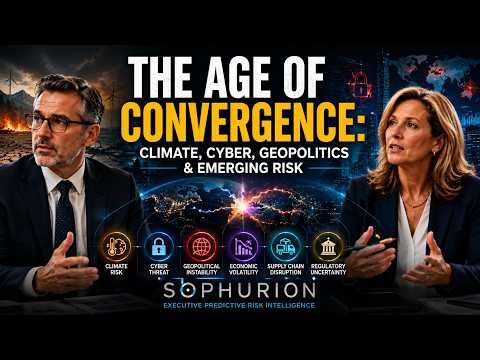
Organizations now operate in a world characterized by accelerating technological disruption, geopolitical competition, climate volatility, cybersecurity threats, demographic shifts, regulatory complexity, and economic uncertainty. These forces do not exist independently of one another. They interact, overlap, and amplify each other in ways that create challenges that are often difficult to anticipate using traditional management approaches. As a result, leaders are increasingly finding that historical experience alone is no longer sufficient to guide decision-making in an environment where conditions can change rapidly and where disruptions can emerge from unexpected directions.
This new reality is forcing organizations to rethink how they define resilience. For many years, resilience was viewed primarily through the lens of business continuity and crisis response. The focus was often on recovering from disruptions after they occurred. While these capabilities remain important, they represent only a portion of what resilience means in the modern era. Increasingly, organizational resilience is becoming a strategic capability centered on anticipation, adaptation, and preparedness. The organizations most likely to thrive over the coming decade may not be those that avoid disruption altogether, but those that develop the capacity to navigate uncertainty more effectively than their competitors.
The End of Predictability
One of the defining characteristics of the modern operating environment is the erosion of predictability. Globalization, digital transformation, and interconnected economic systems have created extraordinary opportunities for growth and innovation. At the same time, they have increased organizational exposure to a wider range of external risks. Events occurring in one part of the world can now generate consequences across multiple industries and geographic regions within a matter of days or even hours.
Recent years have provided numerous examples. Geopolitical tensions have disrupted energy markets and supply chains. Extreme weather events have affected infrastructure, transportation networks, and resource availability. Cyberattacks have halted operations across entire sectors. Advances in artificial intelligence have introduced both significant opportunities and complex governance challenges. Economic uncertainty has influenced investment decisions, labor markets, and consumer behavior. These developments demonstrate that organizations are increasingly operating within systems where risks are interconnected and where the effects of disruption can cascade rapidly across business functions.
Traditional planning models often assume that change occurs gradually and that risks can be evaluated independently. Increasingly, neither assumption holds true. Risks that once appeared manageable within individual departments are now capable of affecting entire organizations. Supply chain disruptions can create financial consequences. Workforce challenges can influence operational performance. Cybersecurity incidents can become reputational crises. Regulatory changes can affect strategic planning and market access simultaneously. The result is a business environment in which complexity itself has become a significant management challenge.
Why Traditional Risk Management Is No Longer Enough
For decades, risk management programs focused primarily on identifying known threats, evaluating historical trends, and implementing controls designed to reduce exposure. This approach worked reasonably well in environments where risks evolved slowly and where disruptions could be analyzed within clearly defined categories.
However, many of today's most significant challenges do not fit neatly into traditional frameworks. Emerging risks often develop across multiple domains simultaneously. They may involve technological, political, environmental, economic, and social dimensions that interact in unpredictable ways. By the time these risks become visible through conventional reporting mechanisms, organizations may have already lost valuable time and flexibility.
This does not mean that traditional risk management has become obsolete. Rather, it means that risk management must evolve. Organizations need capabilities that allow them to move beyond simply identifying risks and toward understanding how risks interact, how they may evolve over time, and what implications they could have for strategic objectives. Increasingly, resilience depends not only on protecting against known threats but also on developing the capacity to recognize emerging challenges before they become significant disruptions.
This shift requires organizations to adopt a broader perspective. Instead of focusing exclusively on what has happened, leaders must devote greater attention to what could happen next. This is where resilience and intelligence begin to converge. The ability to anticipate change, identify emerging signals, and evaluate potential future scenarios is becoming a critical component of organizational preparedness.
The Evolution of Organizational Resilience
As the nature of risk changes, so too must the concept of resilience. Historically, resilience was often associated with recovery. Organizations developed plans to restore operations after disruptions, recover data after system failures, or resume production following unexpected events. While these capabilities remain necessary, they are increasingly insufficient on their own.
Modern resilience is proactive rather than reactive. It focuses on strengthening an organization's ability to function effectively under changing conditions rather than simply recovering after disruptions occur. This broader view encompasses operational resilience, financial resilience, workforce resilience, technological resilience, supply chain resilience, and strategic resilience. Together, these capabilities help organizations maintain performance and adaptability in uncertain environments.
Importantly, resilience is not a static condition that can be achieved through a single initiative or investment. It is an ongoing process that requires continuous evaluation and adaptation. Organizations must regularly assess vulnerabilities, monitor emerging trends, test assumptions, and refine strategies as conditions evolve. Resilience is less about achieving perfect stability and more about maintaining the flexibility necessary to navigate change successfully.
This perspective is becoming increasingly important as the pace of disruption accelerates. Organizations that rely solely on fixed plans and rigid structures may find themselves struggling to respond when conditions deviate from expectations. Those that invest in adaptability, learning, and preparedness are likely to be better positioned to manage uncertainty.
The Role of Executive Intelligence
One of the most significant obstacles to resilience today is not a lack of information. In fact, many organizations face the opposite problem. Leaders have access to unprecedented volumes of data generated by internal systems, external sources, market intelligence platforms, operational dashboards, and regulatory reporting requirements. The challenge is determining which information matters, how various developments are connected, and what actions should be considered in response.
This is where executive intelligence becomes increasingly important.
Executive intelligence differs from traditional reporting because it focuses not only on describing current conditions but also on helping leaders understand implications, relationships, and potential future outcomes. It seeks to transform information into context, context into understanding, and understanding into action. Rather than overwhelming decision-makers with data, executive intelligence helps prioritize issues, identify emerging risks, and support more informed strategic decision-making.
In many respects, resilience depends upon this capability. Organizations cannot prepare for risks they do not recognize. Nor can they respond effectively to challenges they do not fully understand. As operating environments become more complex, the ability to generate meaningful intelligence from diverse information sources becomes a critical component of organizational resilience. Leaders who possess a clearer understanding of emerging risks, changing conditions, and strategic implications are generally better equipped to make decisions under uncertainty.
Building Adaptive Organizations
Adaptability is increasingly becoming one of the defining characteristics of resilient organizations. While efficiency remains important, organizations optimized exclusively for efficiency may struggle when confronted with unexpected disruption. Resilient organizations recognize that uncertainty is not an anomaly but a persistent feature of the modern business environment.
Building adaptability requires more than technology investments or risk assessments. It involves cultivating organizational cultures that encourage learning, flexibility, and innovation. Employees must be empowered to identify emerging challenges, communicate concerns, and contribute to solutions. Leadership teams must remain open to revisiting assumptions and adjusting strategies as conditions change. Decision-making processes must balance short-term performance objectives with long-term resilience considerations.
Supply chain strategies provide a useful example. For many years, organizations prioritized efficiency, cost reduction, and lean operations. While these objectives remain important, recent disruptions have highlighted the importance of diversification, visibility, and redundancy. Similar lessons apply across workforce planning, cybersecurity, technology management, and strategic planning. Resilience increasingly depends on maintaining options rather than pursuing optimization at the expense of flexibility.
Adaptive organizations understand that change is inevitable. Rather than resisting change, they focus on building capabilities that allow them to respond effectively when change occurs.
Resilience as a Strategic Advantage
There is a growing tendency to view resilience primarily as a defensive capability designed to protect organizations from harm. While protection remains an important objective, this perspective overlooks a significant opportunity. Resilience can also create competitive advantage.
Organizations that adapt more quickly to changing conditions are often better positioned to identify emerging opportunities, capture market share, and strengthen stakeholder confidence. During periods of disruption, resilient organizations may be able to maintain operations, serve customers, and continue executing strategic priorities while competitors struggle to respond. Over time, these advantages can compound, contributing to stronger performance and greater long-term success.
This is particularly relevant in an environment where uncertainty is becoming a permanent feature of the business landscape. The ability to navigate complexity, make informed decisions under changing conditions, and adapt effectively to disruption may become one of the most important differentiators between successful organizations and those that struggle to remain competitive.
Viewed through this lens, resilience is not simply about avoiding losses. It is about creating capacity for growth and success despite uncertainty. It is about developing the organizational capabilities necessary to operate confidently in an increasingly complex world.
Looking Ahead
The coming decade is likely to bring continued disruption, transformation, and uncertainty. Technological innovation will continue to reshape industries. Geopolitical dynamics will influence markets and supply chains. Climate-related challenges will affect infrastructure, resources, and operations. Regulatory expectations will evolve. Workforce demographics and employee expectations will continue to change. These forces will create both risks and opportunities for organizations across every sector.
Leaders cannot eliminate uncertainty, nor can they predict every future disruption. What they can do is build organizations capable of adapting to changing conditions, identifying emerging challenges, and making informed decisions despite incomplete information. This is the essence of organizational resilience.
Increasingly, resilience should not be viewed as a contingency plan reserved for times of crisis. It should be understood as a strategic capability that enables organizations to thrive in uncertain environments. As complexity continues to grow and disruption becomes more frequent, resilience may emerge as one of the most valuable assets an organization can possess.
In an era defined by uncertainty, the ability to anticipate change, adapt effectively, and maintain confidence under pressure will separate those organizations that merely survive from those that lead.
Related



Steven W. Pearce
Steven W. Pearce is the Founder & CEO of Sophurion and Creator of Predictive Sustainability Intelligence (PSI), with more than 14 years of experience in sustainability, resilience, strategic intelligence, and executive risk advisory.