
Strategic Foresight as a Competitive Advantage
In a world shaped by accelerating change, interconnected risks, and growing uncertainty, strategic foresight is becoming a critical competitive advantage. Organizations that anticipate emerging risks and opportunities before they fully materialize will be better positioned to strengthen resilience, improve decision-making, and create long-term value.
Executive Intelligence
For much of modern business history, competitive advantage was built around a relatively familiar set of factors. Organizations sought to improve operational efficiency, reduce costs, expand market share, develop innovative products, and attract talented employees. While these priorities remain important, the operating environment confronting leadership teams today is becoming increasingly complex, interconnected, and unpredictable. As a result, a new differentiator is emerging—one that may prove just as valuable as capital, technology, or market position.
That differentiator is strategic foresight.
The ability to anticipate emerging risks, recognize evolving opportunities, and prepare for future conditions before they fully materialize is rapidly becoming one of the most important capabilities an organization can possess. In an era characterized by geopolitical instability, technological disruption, climate volatility, cybersecurity threats, and shifting regulatory expectations, organizations that consistently look beyond immediate challenges may gain significant advantages over those focused exclusively on present conditions.
Strategic foresight is not about predicting the future with certainty. No organization can accurately forecast every disruption, market shift, or technological breakthrough. Rather, strategic foresight is the disciplined practice of exploring possible futures, identifying emerging signals, evaluating potential implications, and using those insights to inform decision-making today. Its purpose is not to eliminate uncertainty but to improve preparedness.
As uncertainty continues to increase, organizations that develop strong foresight capabilities are likely to be better positioned to navigate change, strengthen resilience, and create long-term value.
The Limits of Reactive Decision-Making
Many organizations continue to make decisions primarily through a reactive lens. Leadership teams respond to market changes once they become visible, address risks after they emerge, and adapt strategies after disruptions occur. While this approach may have been sufficient in more stable environments, it is becoming increasingly difficult to sustain in a world where events unfold rapidly and where risks often develop long before they become apparent.
The challenge is that modern disruptions rarely arrive without warning. In most cases, signals exist months or even years before major events occur. Geopolitical tensions often build gradually. Supply chain vulnerabilities emerge over time. Climate-related pressures develop through observable trends. Cybersecurity threats evolve continuously. Technological shifts create indicators long before industries are transformed.
Organizations that wait until disruptions become obvious may find themselves reacting under pressure with limited options available. Those that identify emerging signals earlier have greater flexibility to prepare, adapt, and respond strategically.
This distinction highlights the growing importance of foresight. The question is no longer whether change is coming. The question is whether organizations are paying attention to the signals that may indicate what comes next.
Understanding Strategic Foresight
Strategic foresight is often misunderstood as a forecasting exercise. In reality, it is much broader. Forecasting attempts to estimate what is most likely to happen. Strategic foresight explores multiple possibilities and examines how different trends, risks, and uncertainties could influence future outcomes.
The goal is not to produce a single prediction.
Instead, strategic foresight helps leaders understand a range of potential futures and identify actions that strengthen resilience regardless of which future ultimately emerges.
This process involves monitoring external developments, evaluating long-term trends, identifying weak signals, examining potential disruptions, and assessing how these factors could affect organizational objectives. Effective foresight encourages leaders to look beyond quarterly performance metrics and consider the broader forces shaping the future operating environment.
By expanding awareness of emerging risks and opportunities, organizations can make decisions that are better aligned with long-term realities rather than short-term assumptions.
Why Foresight Matters More Than Ever
Several factors are driving the growing importance of strategic foresight.
First, the pace of change continues to accelerate. Technological innovation, artificial intelligence, digital transformation, and emerging business models are reshaping industries at unprecedented speed. Organizations that fail to anticipate these developments may struggle to remain competitive.
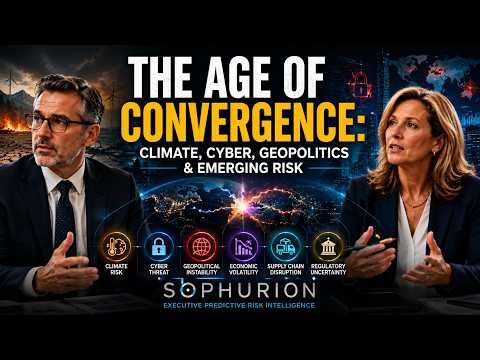
Second, global risks are becoming increasingly interconnected. A geopolitical event can influence energy markets, supply chains, regulatory conditions, and investment decisions simultaneously. Climate-related disruptions can affect infrastructure, workforce productivity, insurance markets, and operational continuity. Cybersecurity incidents can create financial, operational, and reputational consequences across multiple business functions.
Third, uncertainty itself has become a defining characteristic of the modern operating environment. Traditional planning assumptions are being challenged by a world where disruption occurs more frequently and where historical trends are not always reliable indicators of future conditions.
In this context, foresight provides a framework for understanding complexity rather than being overwhelmed by it.
From Risk Management to Opportunity Identification
One of the most valuable aspects of strategic foresight is that it extends beyond risk management.
Many organizations approach future-oriented analysis primarily as a means of identifying threats. While risk identification remains important, foresight also helps organizations recognize opportunities that competitors may overlook.
Emerging technologies, evolving customer expectations, demographic changes, new markets, regulatory developments, and shifting social priorities can all create opportunities for innovation and growth. Organizations that identify these developments early may be able to position themselves ahead of competitors and capture value before markets fully mature.
History provides countless examples of organizations that succeeded not because they reacted more effectively than their competitors, but because they anticipated change sooner. They recognized emerging trends, understood their implications, and acted before those trends became obvious.
Strategic foresight creates the conditions necessary for this type of advantage.
The Connection Between Foresight and Resilience
Resilience and foresight are closely connected.
An organization's ability to adapt to disruption depends largely on how well it understands the forces shaping its future operating environment. Organizations that monitor emerging risks, evaluate alternative scenarios, and assess potential vulnerabilities are generally better prepared to respond when conditions change.
This preparedness creates flexibility.
Leaders have more time to evaluate options, allocate resources, communicate with stakeholders, and implement strategic responses. Rather than being forced into reactive decision-making, organizations can respond from a position of greater awareness and confidence.
In this sense, foresight functions as a resilience multiplier. It does not prevent disruption, but it improves an organization's ability to navigate disruption successfully.
Strategic Foresight and Executive Intelligence
As organizations confront increasing complexity, the relationship between foresight and executive intelligence becomes increasingly important.
Executive intelligence is fundamentally concerned with helping leaders understand what matters, why it matters, and what actions should be considered next. Strategic foresight contributes to this process by providing visibility into emerging risks, opportunities, and future conditions that may influence organizational performance.
Information alone is insufficient.
Organizations already possess more data than ever before. The challenge lies in transforming that information into meaningful intelligence capable of supporting strategic decision-making.
Foresight provides context. It helps leaders understand how trends may evolve, how risks may interact, and how future conditions could influence organizational objectives. When combined with intelligence analysis, foresight becomes a powerful tool for improving preparedness and supporting long-term strategy.
This intersection between foresight and intelligence is likely to become increasingly important as organizations seek to operate effectively within uncertain environments.
Looking Ahead
The future will continue to present organizations with new challenges, unexpected disruptions, and emerging opportunities. Technological innovation will accelerate. Geopolitical dynamics will evolve. Climate pressures will intensify. Regulatory expectations will shift. New risks will emerge while existing risks become more interconnected.
Organizations cannot control these forces.
What they can control is how they prepare for them.
Strategic foresight provides leaders with a framework for understanding uncertainty, identifying emerging developments, and making decisions that strengthen resilience and long-term competitiveness. It enables organizations to move beyond reactive management and toward a more proactive approach to navigating change.
In an era defined by uncertainty, foresight is no longer a luxury reserved for large corporations or government agencies. It is becoming a strategic necessity.
The organizations that thrive over the coming decade may not be those with the most resources or the most sophisticated technologies. They may be those that develop the ability to see change coming before others do and position themselves accordingly.
In an increasingly complex world, strategic foresight is evolving from a planning exercise into a competitive advantage. And for organizations seeking to navigate uncertainty with confidence, that advantage may prove invaluable.
Related



Steven W. Pearce
Steven W. Pearce is the Founder & CEO of Sophurion and Creator of Predictive Sustainability Intelligence (PSI), with more than 14 years of experience in sustainability, resilience, strategic intelligence, and executive risk advisory.