
Supply Chain Risk Outlook 2026 & 2027
Supply chains entering 2026 and 2027 face growing pressure from geopolitical instability, climate volatility, cybersecurity threats, regulatory complexity, and workforce challenges. Organizations that prioritize resilience, visibility, and proactive risk intelligence will be better positioned to navigate uncertainty and maintain competitive advantage.
Executive Insight
Over the past several years, supply chains have moved from the back office to the boardroom. What was once viewed primarily as an operational function is now recognized as a strategic driver of organizational resilience, financial performance, customer satisfaction, and competitive advantage. The disruptions experienced during the pandemic exposed vulnerabilities that many organizations did not know existed. While conditions have stabilized in many regions, the underlying forces that created those disruptions have not disappeared. In many respects, they have become more complex.
As organizations look toward 2026 and 2027, supply chain leaders face a fundamentally different operating environment than the one that existed a decade ago. Geopolitical competition is reshaping global trade relationships. Climate-related disruptions are affecting infrastructure and resource availability. Cybersecurity threats continue to evolve. Regulatory requirements are becoming more complex. At the same time, organizations remain under pressure to reduce costs, improve efficiency, and maintain growth.
The challenge is no longer simply building efficient supply chains.
The challenge is building resilient supply chains capable of operating effectively in an era defined by uncertainty.
The End of the Efficiency-Only Model
For decades, organizations optimized supply chains around efficiency. Global sourcing strategies, lean inventory models, just-in-time delivery systems, and cost minimization initiatives helped companies improve profitability and remain competitive in an increasingly interconnected world.
Those strategies delivered significant value.
However, recent disruptions revealed an important reality. Systems designed exclusively for efficiency often lack the flexibility required to absorb shocks.
Many organizations discovered that a disruption affecting a single supplier, transportation route, manufacturing facility, or geographic region could have cascading effects across entire operations. In some cases, risks that appeared isolated quickly evolved into enterprise-wide challenges.
As a result, leadership teams are beginning to rethink the balance between efficiency and resilience.
The organizations likely to succeed over the next several years will not abandon efficiency. Instead, they will seek a more balanced approach that incorporates redundancy, diversification, visibility, and adaptability into supply chain strategy.
Geopolitical Risk Will Continue to Reshape Global Supply Chains
Perhaps no trend will have a greater influence on supply chain strategy during 2026 and 2027 than geopolitics.
The global economy remains interconnected, but it is increasingly influenced by strategic competition between major powers, shifting alliances, trade restrictions, export controls, sanctions, and concerns surrounding economic security.
Industries dependent upon semiconductors, advanced manufacturing, critical minerals, energy technologies, pharmaceuticals, and strategic infrastructure components are particularly exposed to geopolitical developments.
Many organizations have already begun evaluating supplier concentration risks and geographic dependencies. Others are exploring regionalization strategies, dual sourcing arrangements, and alternative procurement models designed to reduce exposure to potential disruptions.
The objective is not necessarily to withdraw from global markets.
Rather, it is to better understand where vulnerabilities exist and develop contingency plans before disruptions occur.
Supply chain resilience is increasingly becoming a geopolitical issue.
Climate Volatility Is Becoming a Supply Chain Issue
Climate-related disruptions are no longer theoretical future risks. They are operational realities affecting organizations around the world.
Extreme weather events, droughts, floods, wildfires, heat waves, and infrastructure disruptions are creating challenges for transportation networks, manufacturing facilities, agricultural production systems, and energy providers. These events can disrupt production schedules, increase transportation costs, delay deliveries, and affect the availability of critical resources.
Importantly, the effects often extend far beyond the location of the event itself.
A drought affecting one region may influence agricultural production globally. Flooding near a transportation corridor can create delays throughout an international supply network. Energy disruptions can affect manufacturing output across multiple industries.
Organizations that fail to understand their exposure to climate-related disruptions may find themselves increasingly vulnerable as environmental volatility continues to grow.
The conversation surrounding climate risk is gradually shifting from sustainability reporting to operational resilience.
For many organizations, this shift will become increasingly important over the next two years.
Cybersecurity Is Now a Supply Chain Risk
As supply chains become more digitized, cybersecurity is becoming inseparable from operational resilience.
Modern supply chains rely upon interconnected technologies, cloud platforms, logistics systems, supplier portals, data-sharing platforms, and automated processes. While these technologies improve visibility and efficiency, they also create new attack surfaces for cybercriminals and state-sponsored actors.
The risk extends beyond an organization's own systems.
Third-party suppliers, logistics providers, software vendors, and critical infrastructure operators can all become potential points of vulnerability. A cyberattack affecting one organization may quickly create disruptions throughout an entire supply network.
Many organizations have strengthened internal cybersecurity controls but continue to have limited visibility into the cyber resilience of their broader supplier ecosystem.
This represents a growing challenge.
Over the next several years, organizations will need to view cybersecurity not simply as a technology issue but as a critical component of supply chain risk management.
Regulatory Complexity Will Continue to Increase
Organizations operating across multiple jurisdictions face an increasingly complex regulatory landscape.
Governments and regulators continue to introduce new requirements related to sustainability reporting, human rights due diligence, product traceability, cybersecurity, environmental performance, responsible sourcing, and supply chain transparency.
These requirements reflect growing expectations from investors, customers, regulators, and other stakeholders regarding organizational accountability.
While many of these regulations are well-intentioned, they also create additional compliance obligations and reporting requirements that can affect supply chain operations.
The challenge for organizations is not merely understanding individual regulations. It is managing a growing collection of requirements that may differ across countries, regions, and industries.
Supply chain visibility will become increasingly important as organizations seek to demonstrate compliance while maintaining operational efficiency.
Workforce Challenges Remain a Strategic Concern
Technology continues to transform supply chains, but people remain essential.
Organizations across transportation, manufacturing, logistics, warehousing, and distribution continue to face workforce challenges. Skills shortages, demographic changes, leadership succession concerns, and increasing competition for specialized talent remain persistent issues.
The challenge extends beyond hiring.
Organizations must also consider knowledge transfer, workforce adaptability, training, and leadership development. Supply chain resilience depends not only on infrastructure and technology but also on the people responsible for managing complex systems under changing conditions.
As automation and artificial intelligence continue to expand, workforce transformation will become an increasingly important component of supply chain strategy.
Organizations that invest in workforce resilience today may be better positioned to navigate future disruptions.
Looking Ahead
The supply chains of 2026 and 2027 will not be defined by a single risk.
They will be shaped by the interaction of multiple risks occurring simultaneously across an increasingly interconnected global environment.
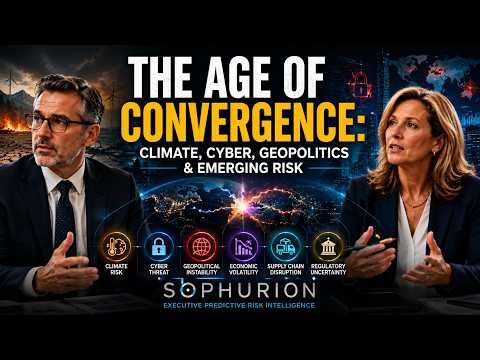
Geopolitical instability, climate volatility, cybersecurity threats, regulatory complexity, and workforce challenges are not isolated issues. They influence one another in ways that can amplify uncertainty and create unexpected vulnerabilities.
Organizations that continue to evaluate these risks independently may struggle to understand the broader picture.
The most resilient organizations will adopt a more integrated perspective. They will improve visibility across supplier networks, strengthen risk monitoring capabilities, diversify critical dependencies, and invest in the intelligence needed to identify emerging disruptions before they escalate.
The future will always contain uncertainty.
The organizations that thrive will not be those that attempt to eliminate risk altogether. They will be those that develop the ability to anticipate change, adapt quickly, and make informed decisions under conditions of uncertainty.
In an increasingly complex world, supply chain resilience is no longer simply an operational objective.
It is a strategic imperative.
Related



Steven W. Pearce
Steven W. Pearce is the Founder & CEO of Sophurion and Creator of Predictive Sustainability Intelligence (PSI), with more than 14 years of experience in sustainability, resilience, strategic intelligence, and executive risk advisory.